

Blog/News
Nov. 16, 2026
Oil seals and shaft seals help stop oil, grease, water, and dust from passing through rotating equipment. The terms are often used as if they mean the same thing, but they are not always identical. An oil seal usually refers to a radial lip seal used around a rotating shaft, while a shaft seal is a wider term that may include lip seals, mechanical seals, V-rings, and other designs. This guide explains how to choose the right seal, what to ask an Oil Seal Manufacturer, and when a custom oil seal manufacturer is needed for a special shaft, fluid, or temperature range.
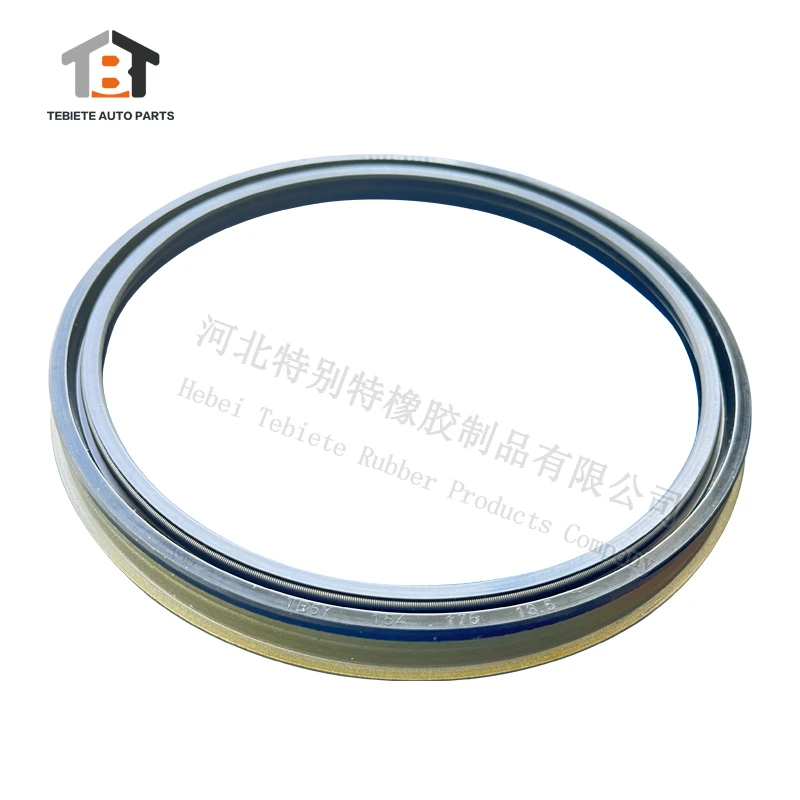
Rotating machines depend on controlled lubrication. Bearings, gearboxes, pumps, motors, agricultural equipment, and vehicle axles all use oil or grease to reduce friction and wear. If the lubricant escapes, the machine can lose its protective film. If dust or water enters, abrasive wear and corrosion may begin.
A properly selected seal performs two jobs at the same time:
The need is not limited to heavy industry. A small electric motor may use a compact rubber lip seal, while a mining gearbox may need a high-temperature seal with an additional dust lip. The correct design depends on shaft speed, pressure, temperature, fluid type, surface finish, and installation conditions.
For buyers, working with an experienced industrial oil seal supplier can reduce trial-and-error orders. A supplier that understands material selection, shaft tolerances, and production inspection can provide a seal that matches the complete operating system rather than only the nominal size.
An oil seal is a sealing component designed to retain oil or grease around a rotating or oscillating shaft. In many applications, it is a radial shaft seal with a flexible sealing lip. The lip presses against the shaft surface and creates a narrow contact zone.
Common parts of a radial oil seal include:
Oil seals are commonly manufactured from nitrile rubber, hydrogenated nitrile rubber, fluorocarbon rubber, silicone rubber, or polytetrafluoroethylene. The correct material depends on the fluid and temperature. For example, nitrile rubber is widely used with mineral oils, while FKM is often selected where higher temperature or chemical resistance is required. Material compatibility must be checked with the actual lubricant, additives, and operating temperature.
A shaft seal is a broader industry term for any seal that prevents leakage along a shaft or around a shaft opening. An oil seal is one type of shaft seal, but not every shaft seal is an oil seal.
Depending on the machine, a shaft seal may be designed to:
Examples include radial lip seals, mechanical seals, packing seals, labyrinth seals, V-rings, and face seals. A mechanical seal normally uses two carefully finished faces pressed together by a spring or hydraulic force. It is common in pumps where fluid pressure and leakage control are more demanding than in a standard gearbox.
Therefore, “shaft seal” describes the function and location, while “oil seal” often describes a particular product type and application. In product catalogs, the two terms may overlap, so the technical drawing and performance specifications are more important than the name alone.
| Comparison point | Oil seal | Shaft seal |
|---|---|---|
| Meaning | Usually a radial lip seal used to retain oil or grease | A general term for sealing around a shaft |
| Typical design | Elastomer lip, case, and spring | May use a lip, mechanical face, packing, labyrinth, or other design |
| Typical media | Oil, grease, and sometimes water | Oil, water, chemicals, gas, slurry, or process fluids |
| Common equipment | Gearboxes, wheel hubs, motors, axles, and bearings | Pumps, mixers, turbines, gearboxes, compressors, and rotating machinery |
| Pressure capability | Often intended for low-pressure sealing unless specially designed | Depends on the seal type; mechanical seals can handle conditions beyond standard lip seals |
| Selection method | Size, material, spring, lip design, speed, and lubricant | All oil-seal factors plus pressure, face materials, cooling, and process conditions |
ISO 6194 covers rotary-shaft lip-type seals and related terms, dimensions, and performance considerations. This standard is useful when discussing conventional radial oil seals because it creates a shared technical language for manufacturers and buyers. However, the standard does not mean that one seal design fits every machine. Application conditions still control the final choice.
A radial oil seal works through controlled contact between the sealing lip and the rotating shaft. The garter spring applies radial force, while the elastomer lip adapts to small shaft movement and surface changes.
During operation, a thin fluid film may form near the sealing edge. This film helps reduce friction and heat. If the lip is too tight, friction and temperature may increase. If it is too loose, leakage may occur. The seal designer must balance contact pressure, shaft speed, lubricant viscosity, elastomer flexibility, and heat dissipation.
Several details influence service life:
For this reason, an oil seal should not be judged only by its outside diameter and inside diameter. A reliable rubber oil seal manufacturer should also review the shaft material, speed, lubricant, temperature, pressure, and contamination level.
Oil seals are used in engines, transmissions, wheel hubs, differentials, steering systems, and constant-velocity joints. They help retain lubricant while limiting the entry of road dust and water. Automotive seals may face rapid temperature changes, vibration, salt, and long service intervals.
Gearboxes use oil seals at input shafts, output shafts, and bearing locations. A seal failure can lower the oil level and increase gear or bearing wear. For high-dust environments, a seal with a dust lip or a secondary protective design may be preferred.
Motors use shaft seals to protect bearings from grease loss, water spray, and dust. The seal must match shaft speed and avoid creating excess friction. In some motor designs, a non-contact labyrinth seal may be used where low friction is more important than complete fluid retention.
Tractors, harvesters, pumps, and planting equipment operate in soil, water, fertilizer, and changing temperatures. A seal for agricultural equipment often needs strong contamination resistance. A double-lip design can help separate the lubricant side from the dirty external environment.
Hydraulic cylinders mainly use rod seals, wipers, guide rings, and other pressure sealing elements. A standard oil seal may not be suitable for a high-pressure cylinder. Buyers should confirm whether the product is designed for radial shaft sealing or reciprocating rod sealing.
Pumps may use mechanical shaft seals when pressure, temperature, or fluid leakage control exceeds the practical range of a conventional lip seal. Chemical compatibility and face material selection are especially important in these systems.
Sealing materials in clean processing equipment may need to meet specific regulatory and hygiene requirements. The buyer should request the correct compliance documents for the intended market and confirm whether the compound, lubricant, and production process are suitable for the application.
| Material | Typical strengths | Points to check |
|---|---|---|
| NBR | Good resistance to many mineral oils and cost-effective for general use | Temperature and chemical limits depend on the compound |
| HNBR | Improved heat, ozone, and mechanical resistance compared with standard NBR | Higher cost and fluid compatibility must be confirmed |
| FKM | Strong resistance to higher temperatures and many fuels or chemicals | Not suitable for every low-temperature or special-fluid condition |
| Silicone | Useful across selected temperature ranges and for some special applications | Lower mechanical strength in some operating conditions |
| PTFE | Low friction and broad chemical resistance | Installation, shaft finish, and energizing design are critical |
These categories are general guidance, not a final approval list. The same elastomer can perform differently when its formulation, hardness, spring design, or lip geometry changes. Ask the supplier for a technical data sheet and compatibility confirmation based on the exact fluid and temperature profile.
A professional purchasing process should review more than unit price. The following checks can reduce leakage risk and improve batch consistency:
Useful technical records may include inspection reports, material certificates, test results, drawings, and change-control documents. A supplier that cannot explain its production and inspection process may create more risk than the initial price difference suggests.
Correct installation is as important as product selection. Even a correctly designed seal may leak if the lip is cut, reversed, stretched, or installed against a damaged shaft.
Check for immediate leakage, abnormal friction, noise, and shaft movement. If the machine has been opened for repair, inspect the shaft sleeve and housing bore before installing a new seal. Replacing the seal without correcting a worn shaft or excessive bearing play may only provide a short-term result.
| Problem | Possible cause | Recommended action |
|---|---|---|
| Oil leaks immediately | Wrong orientation, damaged lip, incorrect size, or poor installation | Stop the machine and inspect the seal, shaft, and housing |
| Leakage after a short operating period | Dry running, excessive shaft runout, wrong material, or shaft groove | Review operating data and inspect the contact track |
| Lip becomes hard or cracked | Excess temperature, ozone exposure, or chemical incompatibility | Select a suitable compound and improve temperature control |
| High friction or overheating | Excessive lip interference, poor lubrication, or misalignment | Check seal design, lubrication, shaft finish, and alignment |
| Dust enters the housing | Damaged dust lip, wrong orientation, or severe external contamination | Use a suitable protective lip or additional contamination barrier |
When comparing suppliers, use recognized technical references instead of relying only on marketing descriptions.
These resources show why seal selection requires application data. Standards define terms and dimensions, but the final product still needs to match the machine’s speed, fluid, pressure, temperature, shaft condition, and installation method.
Send the following information when requesting a quotation or technical recommendation:
For a standard replacement, the original dimensions may be enough for an initial quotation. For a new machine or a repeated leakage problem, detailed operating data is essential. It allows the oil seal manufacturer to select the compound, lip geometry, spring, case, and protective design with greater accuracy.
Not exactly. An oil seal is usually a radial lip seal used to retain oil or grease around a rotating shaft. Shaft seal is a broader term that includes oil seals and other designs such as mechanical seals, packing seals, V-rings, and labyrinth seals.
Only when the equipment design allows it. Mechanical seals and radial lip seals have different pressure, speed, leakage, and installation characteristics. Check the equipment drawing and operating conditions before changing the seal type.
Start with the fluid and temperature range. NBR is common for many mineral-oil applications, while FKM is often chosen for higher-temperature or more chemically demanding conditions. The exact compound must be confirmed with the lubricant manufacturer and seal supplier.
Common causes include a damaged lip, wrong orientation, scratched shaft, incorrect installation depth, excessive shaft runout, dry running, or fluid incompatibility. A new seal cannot correct a worn shaft or damaged housing.
No. A double-lip seal can improve protection against external contamination, but the additional lip may increase friction. The correct design depends on the balance between contamination, speed, heat, lubrication, and available space.
Provide dimensions, shaft speed, temperature, pressure, fluid, shaft material, surface condition, contamination level, and installation details. Photos, drawings, failed samples, and leakage records can also help the supplier identify the root cause.
Store them in a cool, dry, clean place away from direct sunlight, ozone sources, excessive heat, and deformation. Keep seals in their original packaging until installation and avoid hanging or compressing them for long periods.
TEBIETE can be considered for oil seal sourcing, custom dimensions, material selection, and application review. Before placing an order, share the complete operating conditions and request drawings, samples, inspection information, and compatibility confirmation.
The main difference is simple: an oil seal is a common type of shaft seal, while shaft seal is the wider category. The correct choice depends on the machine, fluid, pressure, speed, temperature, contamination, and shaft condition. Before ordering, compare the technical drawing with the real equipment and review installation instructions. If standard dimensions do not solve the problem, contact TEBIETE with your operating data and ask for a sample or engineering review from a qualified custom oil seal manufacturer.
Related News
Nov. 24, 2026
Nov. 24, 2026
Nov. 23, 2026
Nov. 20, 2026
Nov. 20, 2026
TEBIETE oil seals will be showcased at the 2026 China International Bearing Industry Expo
Nov. 20, 2026
Nov. 19, 2026
Nov. 18, 2026
Nov. 17, 2026
Discover Our Best-Selling Oil Seal
Get a Quote


