

Blog/News
Oct. 22, 2026
An oil seal is a precision sealing component that prevents lubricant from escaping and stops dust, water, and other contaminants from entering a rotating shaft assembly. An Engine Oil Seal, Axle Oil Seal, or Transmission Oil Seal uses an elastomeric sealing lip, a metal case, and often a garter spring to maintain contact with the shaft. In practical applications, the correct seal protects bearings and gears, reduces maintenance costs, prevents oil-related failures, and helps businesses keep vehicles and industrial equipment operating safely.
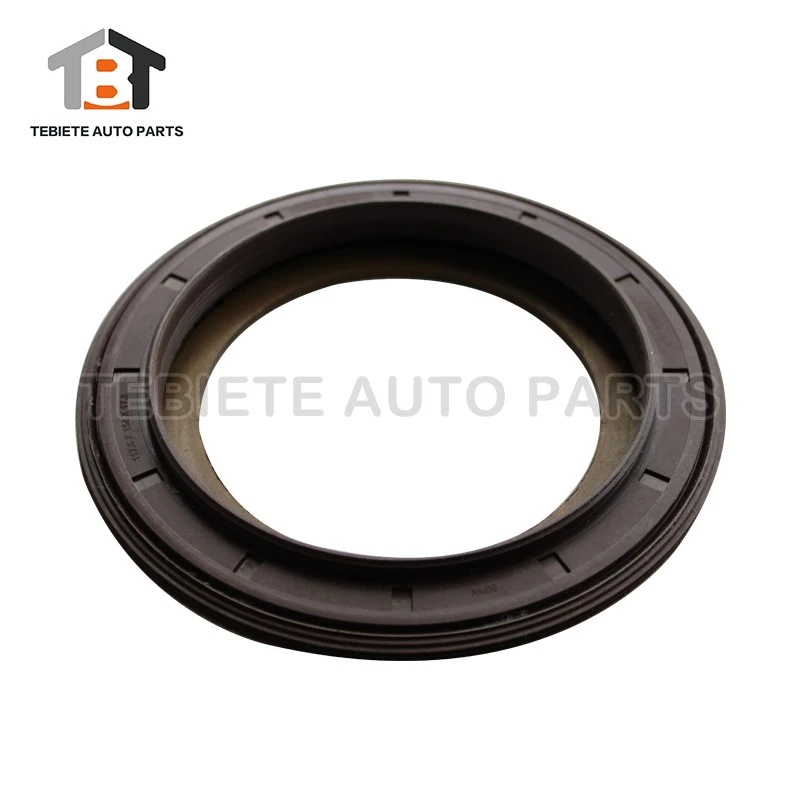
Oil seals are also called radial shaft seals, rotary shaft seals, or lip seals. They are installed around a rotating shaft to create a controlled barrier between:
A typical oil seal contains four main elements:
The seal must allow the shaft to rotate while maintaining a narrow, controlled lubricating film. This balance is essential. Excessive friction creates heat, while insufficient contact pressure causes leakage.
TEBIETE oil seal solutions can be selected according to shaft speed, temperature, lubricant type, pressure, shaft hardness, and housing design.
Early machinery relied on packing materials, felt rings, and simple mechanical barriers. These solutions were suitable for low-speed equipment but often produced high friction and inconsistent sealing performance.
As internal-combustion engines, transmissions, agricultural machines, and industrial gearboxes became more advanced, manufacturers required seals that could:
Modern rotary shaft seals developed through improvements in elastomer chemistry, molding technology, spring design, and surface engineering. Today, seal manufacturers use dimensional controls, material testing, pressure testing, and endurance testing to achieve reliable performance.
Relevant industry references include:
The applicable standard depends on the seal type, industry, and customer specification. A professional supplier should provide clear technical documentation rather than relying only on a part number.
An Engine Oil Seal is used around rotating engine shafts, including crankshafts, camshafts, balance shafts, and accessory shafts.
The engine environment is demanding because it combines high temperature, vibration, oil additives, and continuous shaft rotation. A rear main seal, for example, must prevent engine oil from reaching the clutch or torque-converter housing.
A leaking Engine Oil Seal should not be treated as a minor cosmetic issue. Low lubricant levels can accelerate bearing wear, while oil contamination may damage belts, friction plates, or electrical components.
An Axle Oil Seal prevents differential or axle lubricant from escaping around the axle shaft, half-shaft, or wheel-end assembly. It also prevents water, mud, and road debris from entering the differential housing or bearing cavity.
The Axle Oil Seal is especially important in:
Axle lubricant protects gears, side bearings, carrier bearings, and other drivetrain components. If the seal leaks, the oil level can fall below the design requirement. This may result in:
A damaged axle shaft surface is a frequent reason for repeated leakage. Even a new seal may fail if it runs on a worn groove, rusted area, or improperly finished shaft.
When selecting an Axle Oil Seal, verify:
For severe off-road environments, a dual-lip design, dust lip, hydrodynamic groove, or specialized protective coating may be required.
A Transmission Oil Seal is installed in manual transmissions, automatic transmissions, transfer cases, and continuously variable transmissions. Typical locations include:
Transmission seals must be compatible with the specified fluid. Automatic transmission fluid, gear oil, and continuously variable transmission fluid have different additive packages and viscosity characteristics. A rubber compound that performs well in engine oil may not provide the same service life in transmission fluid.
Transmission leakage should be diagnosed quickly. Continuing to operate with inadequate lubricant can damage synchronizers, gears, bearings, hydraulic components, or clutch assemblies.
| Seal type | Typical location | Primary fluid | Main operating concern | Frequent failure result |
|---|---|---|---|---|
| Engine Oil Seal | Crankshaft, camshaft, oil pump | Engine oil | Heat, speed, vibration | Oil loss or clutch contamination |
| Axle Oil Seal | Axle shaft, differential, wheel end | Gear oil or axle lubricant | Dirt, water, shaft wear | Gear and bearing damage |
| Transmission Oil Seal | Input/output shaft, selector shaft | ATF, gear oil, or CVT fluid | Fluid compatibility and speed | Gearbox damage or shifting problems |
Although these products look similar, they are not automatically interchangeable. Seal dimensions, elastomer compound, lip design, spring material, and pressure capability may be different.
Matching the inside diameter, outside diameter, and width is not enough. The replacement must also match the operating temperature, fluid chemistry, shaft speed, pressure, and installation direction.
Leakage may be caused by:
A complete root-cause analysis is more effective than simply replacing the seal.
Excessive radial load can increase friction, heat generation, and lip wear. The correct design maintains sufficient contact pressure without creating unnecessary drag.
Different elastomers have different strengths:
The compound should be selected from actual operating conditions, not appearance or price alone.
When a customer reports an oil leak, use the following process.
Clean the area and inspect it after operation. Oil can travel along housings, shafts, or underbody panels, making the apparent leak location misleading.
Document:
Use calibrated instruments to verify shaft diameter, housing bore, and seal width. For precision applications, dimensional control to 0.01 mm may be required.
Check the shaft for grooves, corrosion, scoring, runout, and excessive hardness variation. Inspect bearings and housing alignment before installing a new seal.
Compare the lubricant and temperature with the elastomer’s technical data. Testing such as ASTM D471 fluid immersion can help evaluate volume change, hardness change, and tensile-property retention.
Important installation practices include:
After installation, inspect for leakage during a controlled run-in period. For production programs, quality records may include 100% visual inspection, dimensional inspection, material batch traceability, and functional testing.
A construction vehicle returned to service three times with the same axle leak. The initial response was to replace the Axle Oil Seal repeatedly. However, the real cause was a worn shaft journal combined with a blocked axle breather.
The repair process included:
This example demonstrates why seal replacement alone may not solve the problem. The seal, shaft, housing, lubricant, and ventilation system function as one sealing system.
When sourcing an Engine Oil Seal, Axle Oil Seal, or Transmission Oil Seal, buyers should request more than a product photograph. A technically reliable supplier should support:
TEBIETE can be evaluated according to its ability to provide consistent specifications, clear inspection records, and application-specific recommendations. For critical programs, ask for documented inspection criteria, applicable DIN or ISO references, and test reports linked to the production batch.
Before approving a seal, confirm the following:
An Engine Oil Seal protects the power unit, an Axle Oil Seal protects the differential and wheel-end assembly, and a Transmission Oil Seal protects the gearbox from lubricant loss and contamination. The best result comes from treating the seal as part of a complete system that includes the shaft, housing, bearing, lubricant, temperature, pressure, and installation method.
For reliable selection, verify dimensions to the required tolerance, choose the correct elastomer, follow DIN 3760 or ISO 6194 guidance where applicable, and investigate the root cause of every repeated leak. With application-focused support and documented quality controls from TEBIETE, businesses can reduce downtime, prevent secondary component damage, and improve the service life of automotive and industrial equipment.
Related News
Oct. 26, 2026
Oct. 23, 2026
Oct. 09, 2026
Sep. 22, 2026
Sep. 21, 2026
Sep. 17, 2026
Sep. 16, 2026
Sep. 15, 2026
Discover Our Best-Selling Oil Seal
Get a Quote


